AI Investment & Infrastructure in Canada
This was imported from LinkedIn

A Preface - Privatization of Tech Funding
Globally, technology investment is increasingly moving toward private markets due to the flexibility and long-term focus they offer. Sectors like AI and fintech are attracting significant private funding, with investors drawn to their transformative potential. Private markets allow tech companies to innovate without the pressures of public markets, leading to a rise in large-scale deals and take-private transactions.
In Canada, private investment in technology has surged, with sectors like fintech and AI seeing robust growth. In 2024, Canadian fintech investments reached a record $9.5 billion across 121 deals, largely driven by private equity buyouts such as Nuvei's $6.3 billion take-private deal—the second-largest fintech deal globally. Excluding major transactions like Nuvei and Plusgrade ($1 billion), Canadian fintech still attracted $2.2 billion in investments, nearly double the amount in 2023. This demonstrates strong interest from both VC and PE firms as they target growth-stage companies and startups.
If you're interested in learning more about this trend toward private ownership, I recommend checking out The Private Markets Forum, a page I used to keep up to date on PE.
AI VC Funding
Venture capital has become the primary method of financing many of the most impactful AI companies. VC is vital for AI because it provides the funding and strategic resources needed to drive innovation, scale, and adoption in this rapidly evolving field exposed to high risk. AI development often requires significant capital for research, infrastructure, and model training, which VC firms supply while also taking on the high risks associated with emerging technologies and unproven management.
Most Successful VC-Backed AI Companies in the United States
- OpenAI: Raised $6.6 billion in October 2024 (largest single VC round ever), led by Thrive Capital, with participation from Microsoft, Nvidia, and Khosla Ventures.
- xAI: Secured $6 billion Series C funding in 2024, with key investors including Sequoia Capital and Andreessen Horowitz.
- Databricks: Closed a $1.6 billion Series H funding round in 2021, led by Andreessen Horowitz and Tiger Global.
Largest VC-Backed AI Companies in Canada
- Tenstorrent: Raised nearly $700 million in its Series D round from investors including Jeff Bezos's investment firm and Samsung.
- Cohere: Raised a total of approximately $950 million across different rounds ($450M + $500M), with funders like Nvidia and Salesforce.
- Waabi: Secured a total of more than $280 million combined across all its rounds, led by Uber and Khosla Ventures.
It is important to note that America is far larger in population and size of the economy, so take total values with a grain of salt (see the notes for more info). VC investment in artificial intelligence in the United States has significantly outpaced that in Canada. In 2024, AI startups in the United States raised approximately $97 billion, accounting for 46% of all venture capital funding (Crunchbase). This marked a notable increase, with AI companies capturing nearly 30% more funding than in previous years. Additionally, AI startups represented 22% of first-time venture capital financing, raising $7 billion specifically for AI and machine learning startups.
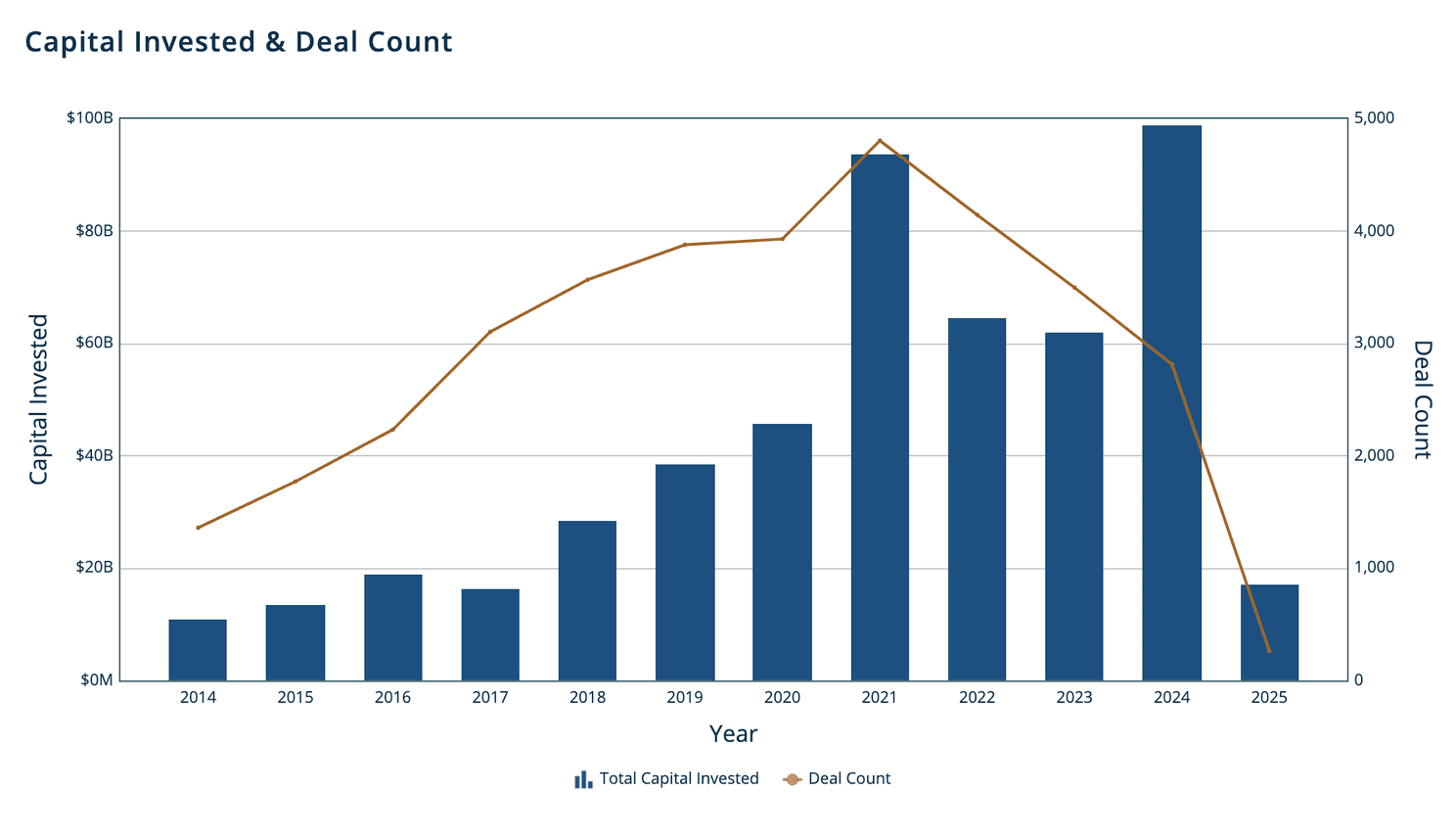
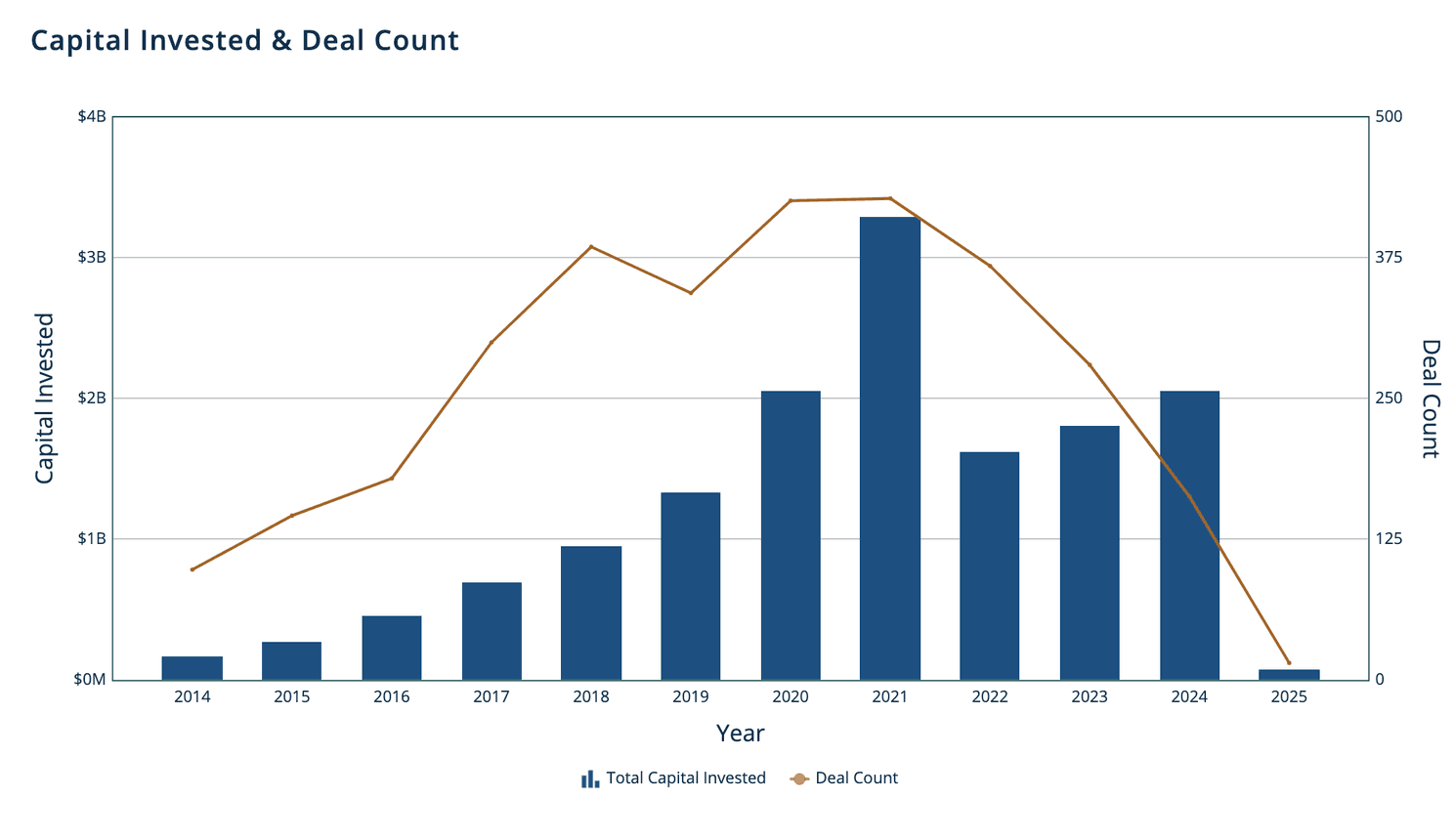
In contrast, Canada has seen a smaller scale of investment in AI. The majority of VC funding comes from early-stage innovation companies. The Canadian market is growing, but it remains behind the U.S. in terms of total funding and the number of VC deals. Many analysts cite Canada's high tax rate as discouraging this type of investment.
A particularly discouraging tax is the capital gains tax which the Government of Canada proposed raising the "inclusion rate on capital gains—which included profits from the sale of assets like stock or property—from one-half to two-thirds last April" (BetaKit). The Council of Canadian Innovators (CCI) president Ben Bergen agreed the decision would cause harm to innovation.
"CCI has been explaining that this tax hike is bad policy, and harms Canada's innovation economy" — Ben Bergen
Kim Furlong, CEO of the Canadian Venture Capital and Private Equity Association (CVCA), echoed Bergen and said the recent deferral in this capital gain's tax is welcome but doesn't address the underlying issue of prolonged uncertainty, reducing risk tolerance (BetaKit).
AI Funding from the Government
Over the past two years, we have seen a significant increase in compute demand. To fill that gap governments need to focus on increasing infrastructure to facilitate larger data centers.

The United States and Canada have taken distinct approaches to government investment in AI. The U.S. has announced a $500 billion private-sector-led investment initiative, known as the Stargate Project, aimed at building AI infrastructure for late-stage scaling. In contrast, Canada has committed $2.4 billion CAD in 2024 to support AI infrastructure, startups, and safety measures.
The focus areas of these investments differ significantly. The U.S. prioritizes large-scale private investment, deregulation, and reducing barriers to innovation, whereas Canada emphasizes public funding for sovereign computing infrastructure, AI adoption in key sectors, and startup scaling.
The U.S. has adopted a deregulated approach, implementing policies that minimize government control over AI development to encourage rapid innovation. In comparison, Canada promotes ethical AI development through government-backed programs such as the AI Assist initiative, which supports small and medium-sized enterprises (SMEs).
U.S. seeks to maintain dominance by attracting private capital and competing with China, while Canada aims to secure its position as a leader in AI research and talent while addressing the broader global competition.
Canada is fighting to catch up to the United States AI development, with funding coming federally. However, it is important to question whether or not the government's allocation of tax collected from the startups it aims to foster is the right approach.
Utilization of Canada's Natural Resources
A close mentor recently said, "Canada is the only country that hates its natural resources." He was referring to the mining sector, but Canada's natural resources go hand in hand with one of Canada's advantages in the AI race. However, a 2023 poll showed that 68% of Canadians believe Canada should expand energy exports, particularly liquefied natural gas (LNG), due to growing global demand (Research Co). Additionally, 81% prefer using Canadian electricity over imports from other countries (Research Co). This shows that current policy is unaligned with Canadian sentiment. Without using our natural resources, we will be lost in the race for AI.
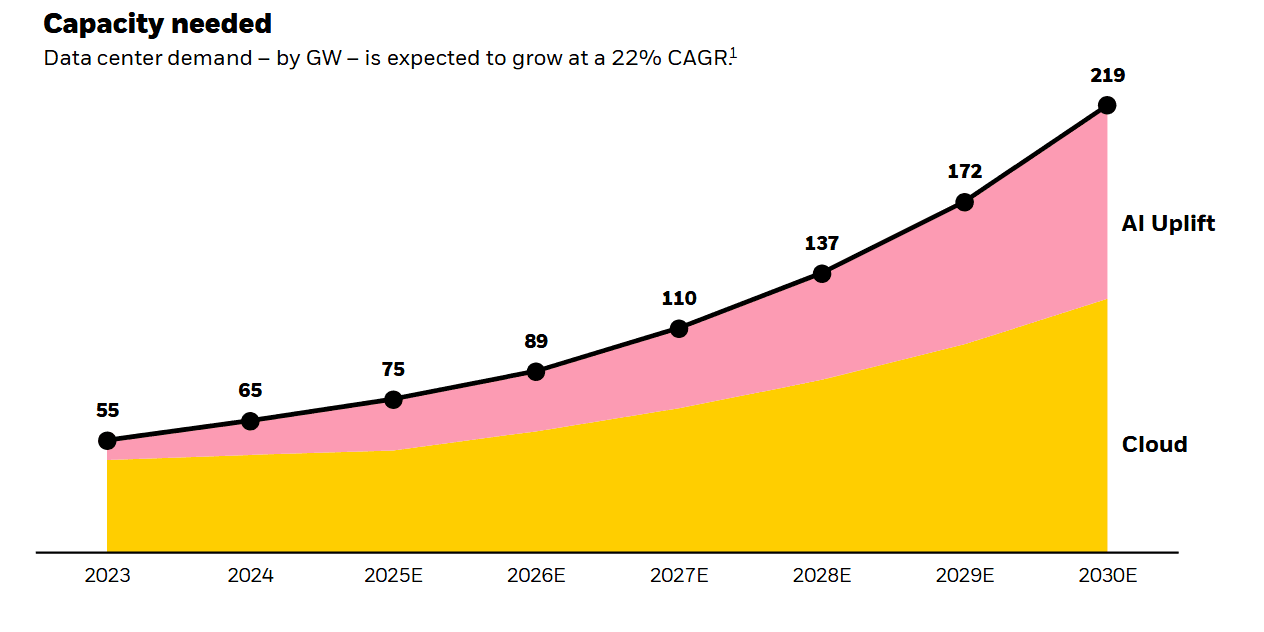
Electricity, which is often renewable in Canada, is one of the main expenses in large data centers. Canada is uniquely positioned to use its vast amount of renewable electricity, especially hydroelectricity, to power these data centers. Sustainably powered data centers are in high demand with companies such as Google capitalizing on it, committing to "operating its data centers and offices on 24/7 carbon-free energy by 2030" ("Aiming to Achieve Net-Zero Emissions - Google Sustainability"). Companies operating in Canada are already taking advantage of this resource. IREN is a company that owns and operates next-generation data centers powered entirely by renewable energy. These facilities are optimized for high-performance computing tasks such as Bitcoin mining, AI cloud services, and other computationally intensive applications. By leveraging 100% renewable energy, IREN focuses on sustainability while providing cutting-edge infrastructure for emerging technologies.
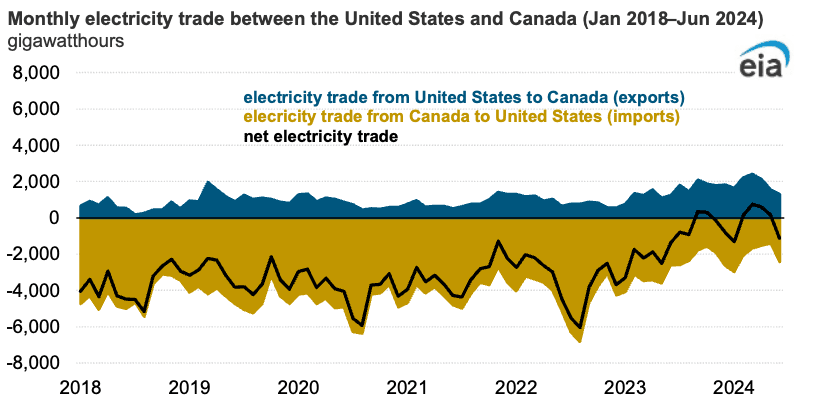
However, clean Canadian data centers, such as IREN's, can only operate if there is clean Canadian energy. There has been a concerning decrease in the net electricity trade between Canada/United States, reducing our electricity advantage.
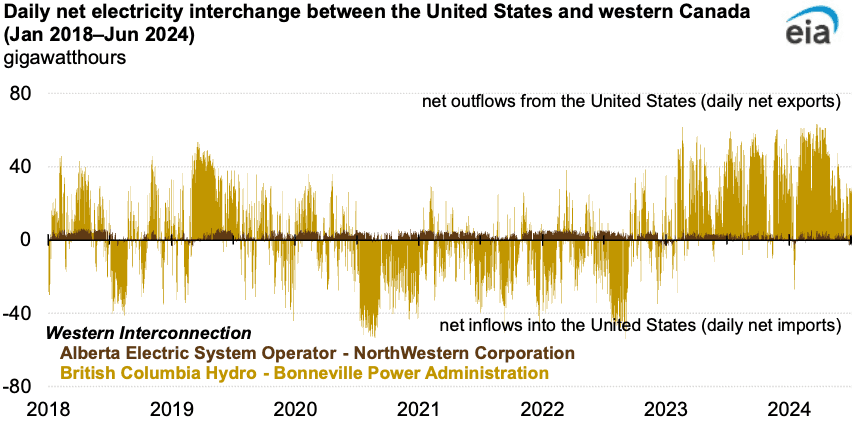
The decreasing surplus is primarily caused by BC/Alberta being the only grids to be net importers. Canada's competitive advantage in data center development lies in its abundant renewable energy, with over 80% of electricity coming from non-emitting sources like hydro and wind. Importing U.S. electricity, which is often more carbon-intensive, undermines this advantage by:
- Weakening Sustainability Credentials: Data centers prioritize low-carbon energy. Using U.S. imports reduces Canada's appeal to green-focused investors and companies.
- Slowing Renewable Energy Growth: Relying on imports limits investment in local wind, solar, and hydro projects, missing economic opportunities and job creation.
- Losing Global Competitiveness: Other regions aggressively promote renewables for data centers. Importing power risks Canada falling behind in the global market.
Summary and Takeaways
- Tech Investment Shifts Private: AI is attracting massive private funding, enabling innovation free from public market pressures.
- VC Fuels AI Growth: U.S. AI startups raised $97B in 2024, far outpacing Canada, though firms like Cohere and Tenstorrent are gaining traction.
- U.S. vs. Canada Government AI Strategy: The U.S. is trying to facilitate private-led AI investment for late-stage scalings, such as the $500B Stargate Project. While Canada is focusing on federal strategic efforts for early-stage commercialization and increasing data center independence through public AI funding ($2.4B CAD).
- Canada's Data Center Edge at Risk: Its renewable energy advantage is threatened by declining electricity exports, impacting AI sustainability and growth.
Notes
All financial figures are in $USD unadjusted for inflation, unless noted otherwise.
When comparing the total $value and amount of deals internationally, it's important to acknowledge that the United States is 8.17x bigger than Canada by population and 12.9x bigger by GDP.
Sources
- Aiming to Achieve Net-Zero Emissions - Google Sustainability
- Announcing The Stargate Project - OpenAI
- What's in #Budget2024 for Canadian tech? - BetaKit
- 2025 Private Markets Outlook - BlackRock
- Crunchbase
- Federal government delays implementation of capital gains inclusion rate increase to 2026 - BetaKit
- Federal government commits $2.4 billion to AI compute, startups, and safety through Budget 2024 - BetaKit
- U.S. electricity exports to Canada have increased since September 2023 - U.S. Energy Information Administration