Replace or Augment?
This was imported from LinkedIn
Executive Summary
Generative AI is transforming the job market by shifting skill demands, particularly in high-cognitive and knowledge-based industries. AI adoption has surged, with employees leveraging its benefits more than their leaders, suggesting unrealized productivity potential due to unagile leadership. AI-powered tools utilizing large language models (LLMs) and AI agents are already reshaping industries by automating workflows and augmenting high-level decision-making. This shift is driving a rising demand for advanced technical and analytical skills. As AI continues to advance, businesses and professionals must adapt through continuous learning and targeted upskilling to remain competitive and bridge the skill gap.
Introduction
Generative AI has rapidly expanded its capabilities over the last two years, initiating a global shift in skill demand. Historically, technological and scientific advancements have impacted manual labor and basic cognitive tasks. However, AI is now reshaping demand for higher-order cognitive skills.
ChatGPT, OpenAI's flagship product, has dominated AI discourse for over a year. However, the broader impact lies in AI-driven systems and their transformation of work structures. The near-weekly advancements in AI, particularly LLM releases, indicate fierce competition among tech giants pushing technical innovation. Recently, the Chinese startup DeepSeek released its cutting-edge model, DeepSeek-V3, which rivals leading models at a fraction of the price. The increasing frequency and impact of these developments underscore the urgency of understanding AI's economic and workforce implications.
AI use cases
LLMs are fueling new startups, each creating value in specialized domains while collectively influencing nearly every industry.
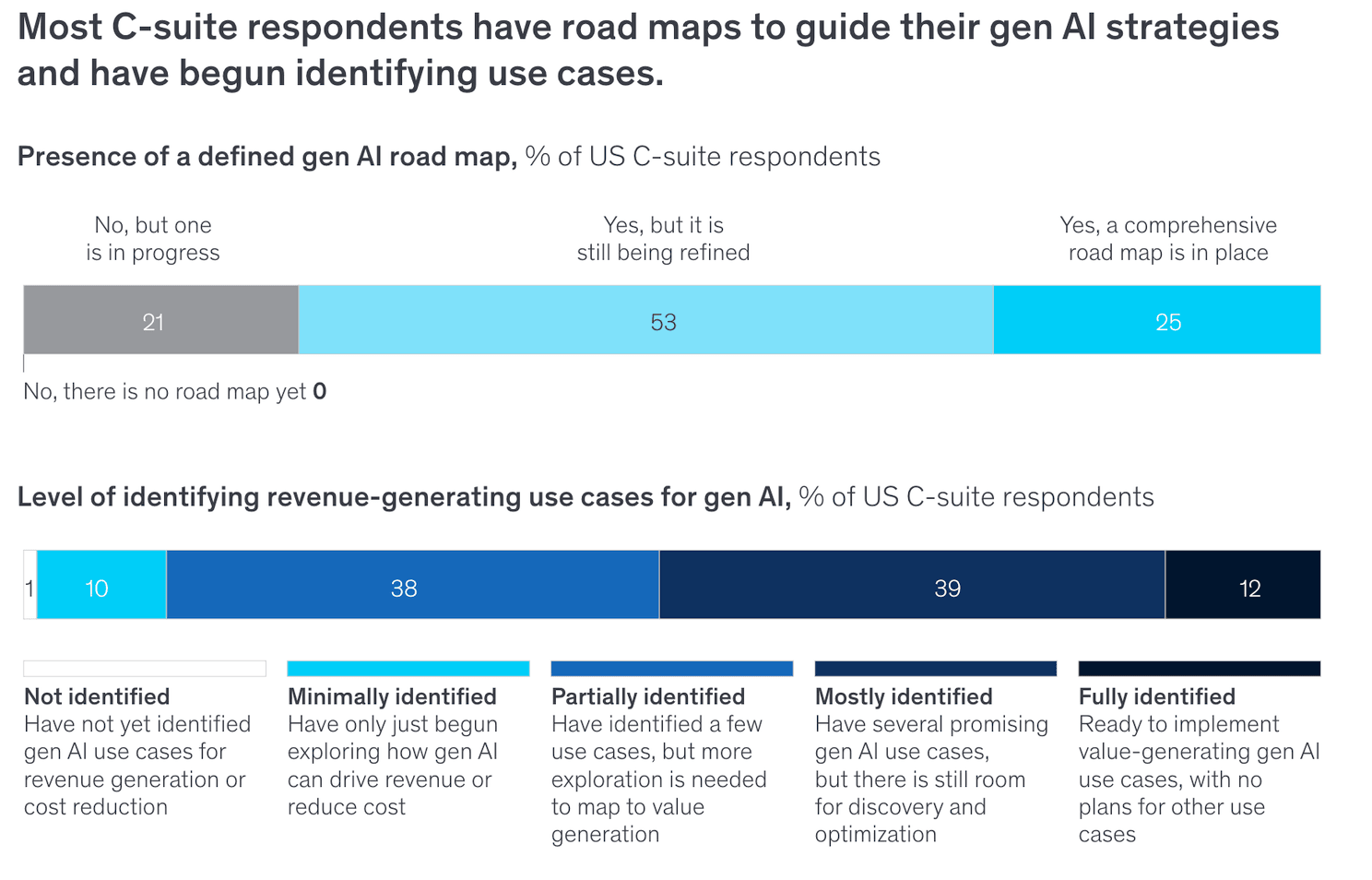
Recent advancements have increased AI's impact and speed in key applications. With architectures such as retrieval-augmented generation (RAG), companies can feed vast amounts of information into AI models for real-time use. This allows AI to function as an expert on massive datasets, finding key insights in seconds. Many AI startups are built around this single technology. For example, Clio utilizes RAG to enhance lawyers' workflows by ingesting and analyzing extensive legal data.
More recently, startups have begun offering AI solutions that chain multiple AI interactions together, automating entire workflows. AI tools leveraging LLMs in combination with other systems are often referred to as AI agents. These agents are advancing toward "human-level competency" in various tasks and are considered AI's "most economically impactful" application to date. For instance, Cypress AI, an LA-based startup, employs AI agents to automate the RFP (Request for Proposal) response cycle, enabling consultants to respond faster and more effectively.
AI-driven automation is accelerating and expanding, affecting productivity and job roles across industries. "Early research suggests that while generative AI will likely boost overall productivity, it may disproportionately replace low-skilled workers".
Changing skill demand
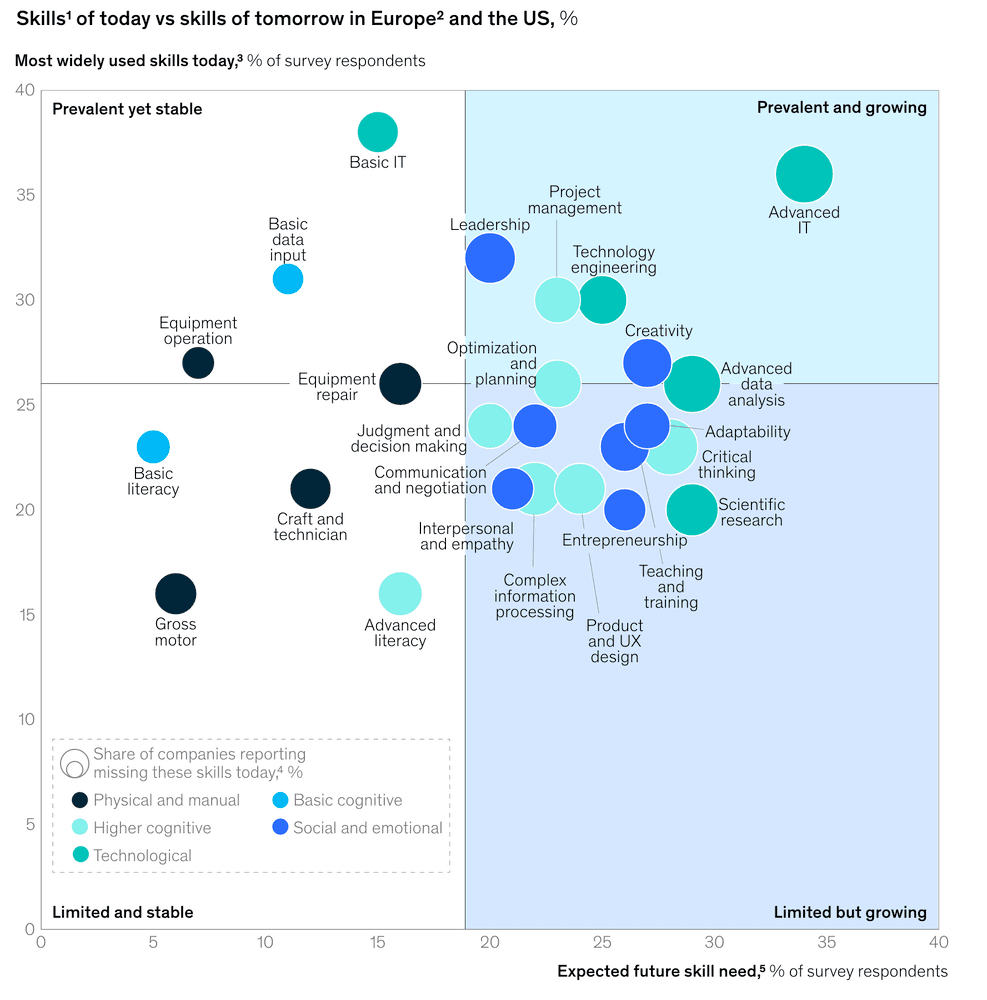
Businesses increasingly seek professionals who can extract actionable insights from AI-generated data, highlighting the growing importance of data literacy and analytics across industries. Additionally, AI adoption raises demand for soft skills such as creativity, critical thinking, and emotional intelligence. These skills are essential for assessing and refining AI-generated outputs, much like how managers enhance individual performance.
Not another industrial revolution
Technological advances, such as big data, have restructured job roles rather than eliminating them outright. AI presents a more complex challenge—it doesn't merely replace jobs but transforms entire roles by augmenting human capabilities. According to OECD research (2024), AI exposure is highest among high-skilled, cognitive-based jobs, requiring even well-educated professionals to continually adapt and upskill. Unlike previous waves of automation, AI's impact extends beyond blue-collar jobs, significantly disrupting white-collar professions in law, finance, and healthcare.
Occupational transformation
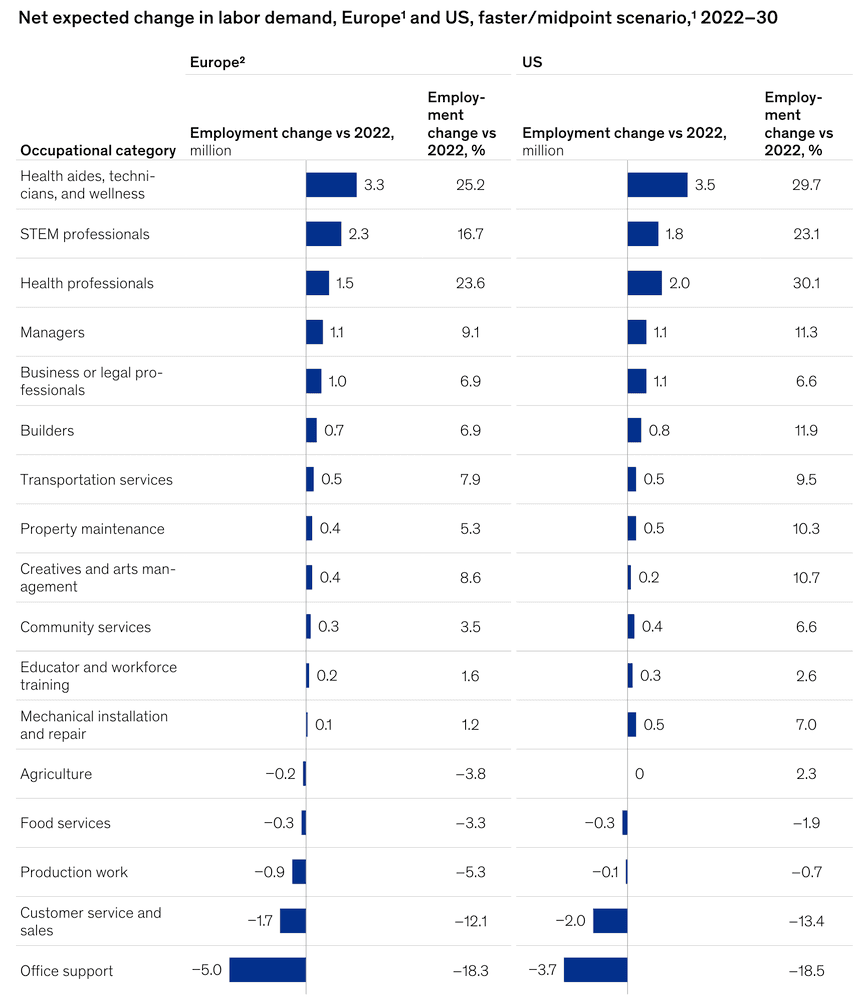
By 2030, demand for STEM and health professionals is projected to grow significantly, increasing by 17-30% in both Europe and the U.S., adding 7 million jobs in each region. Despite 2023 tech layoffs and the rise of generative AI, long-term demand for tech talent remains strong. Healthrelated jobs, including aides and technicians, are expected to grow by 25-30%, adding 3.3 million jobs in Europe and 3.5 million in the U.S.
Conversely, roles in food services, production, customer service, sales, and office support—those with high automation potential—are expected to decline, with job losses ranging from 300,000 to 5 million in Europe and 100,000 to 3.7 million in the U.S. Other sectors, such as education, business, law, and community services, will expand in line with overall demand. Jobs in management, construction, creative industries, and transportation may see moderate growth of 8-9%.
The decline in demand for entry-level skills will create challenges in staffing mid- and high-skilled positions. While some organizations will initially view AI as a substitute for entry-level jobs, internal talent development will become crucial, potentially leading to an industry-wide trend of increasing mid-level hire value.
How the workforce is adapting
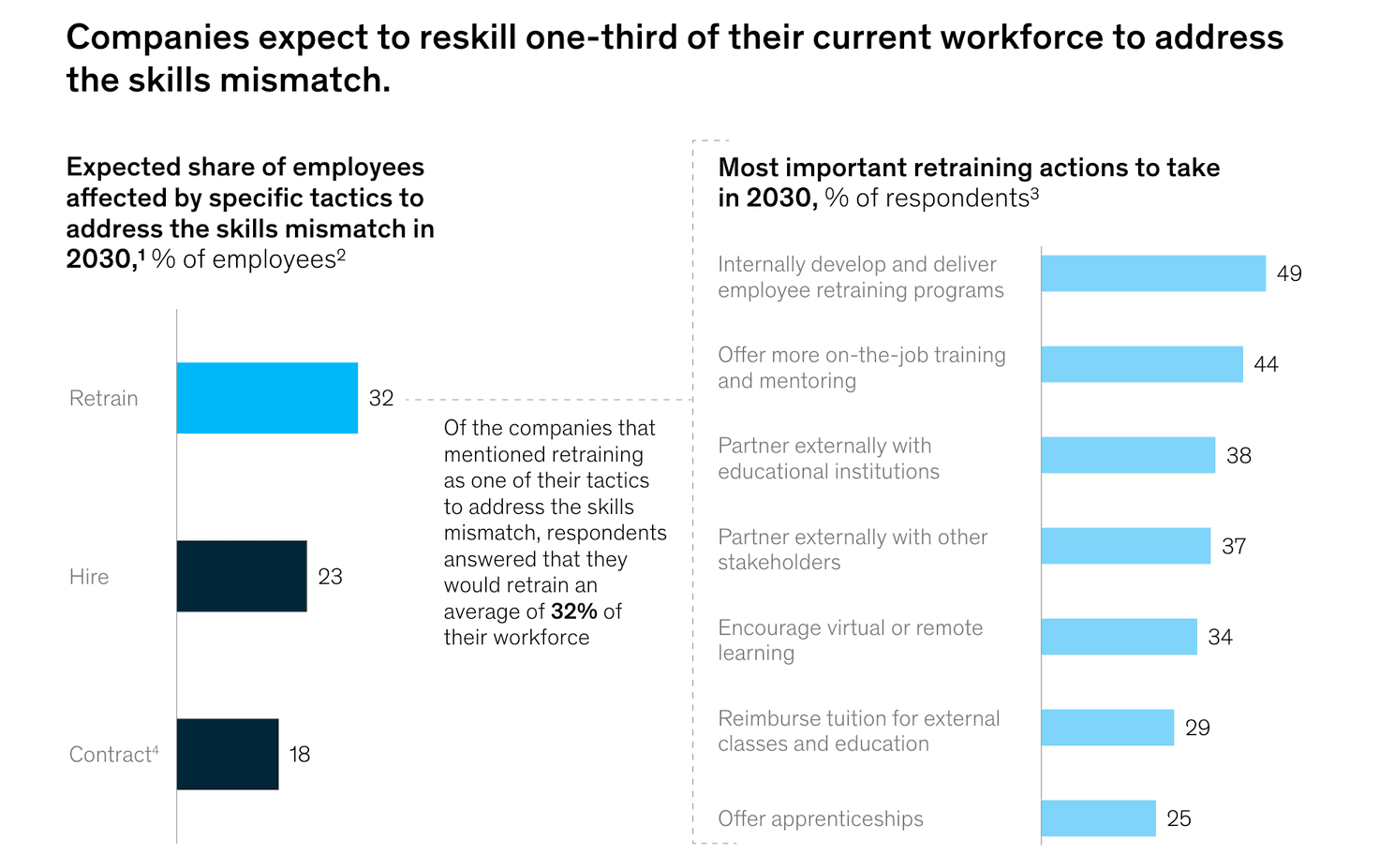
Bridging the gap between post-secondary education and evolving industry demands will require a transformation in education and workforce training. Business degrees will place greater emphasis on data analytics and AI adoption, while software engineers will work more closely alongside AI agents.
According to an IMF report on generative AI, "advanced economies must upgrade regulatory frameworks and invest in AI-integrated education systems to ensure workers acquire the necessary skills to thrive". The demand for additional training—such as microcredentials, online certifications, and industry-driven programs—is rising as professionals and organizations seek to upskill in AI-relevant fields without pursuing traditional four-year degrees.
Conclusion
Although AI technology is evolving rapidly, its economic and workforce impacts are still unfolding. The primary driver of labor market change will be AI applications tailored to specific use cases. Unlike previous technological shifts, AI will disproportionately affect high-paying, knowledge-based jobs. Entry-level positions in fields such as law will be among the most susceptible to automation, leading to a widening gap between entry- and mid-level roles. This will compel companies to adopt more aggressive talent development strategies while prompting professionals to pursue continuous, non-traditional learning to stay competitive.
References
- Captain, S. (n.d.). How AI Will Change the Workplace. WSJ.
- Clio. (n.d.). Retrieved February 2, 2025, from https://www.clio.com
- Cypress AI - RFP Automation Reimagined
- DeepSeek. (n.d.). Retrieved February 2, 2025, from https://www.deepseek.com/
- Mayer, H., Yee, L., Chui, M., & Roberts, R. (2025). Superagency in the Workplace. McKinsey.
- Natalie, C. (2024). OECD Artificial Intelligence Papers.
- Pizzinelli, C. (n.d.). Gen-AI: Artificial Intelligence and the Future of Work. STAFF DISCUSSION NOTES.
- The race to deploy generative AI and raise skills | McKinsey